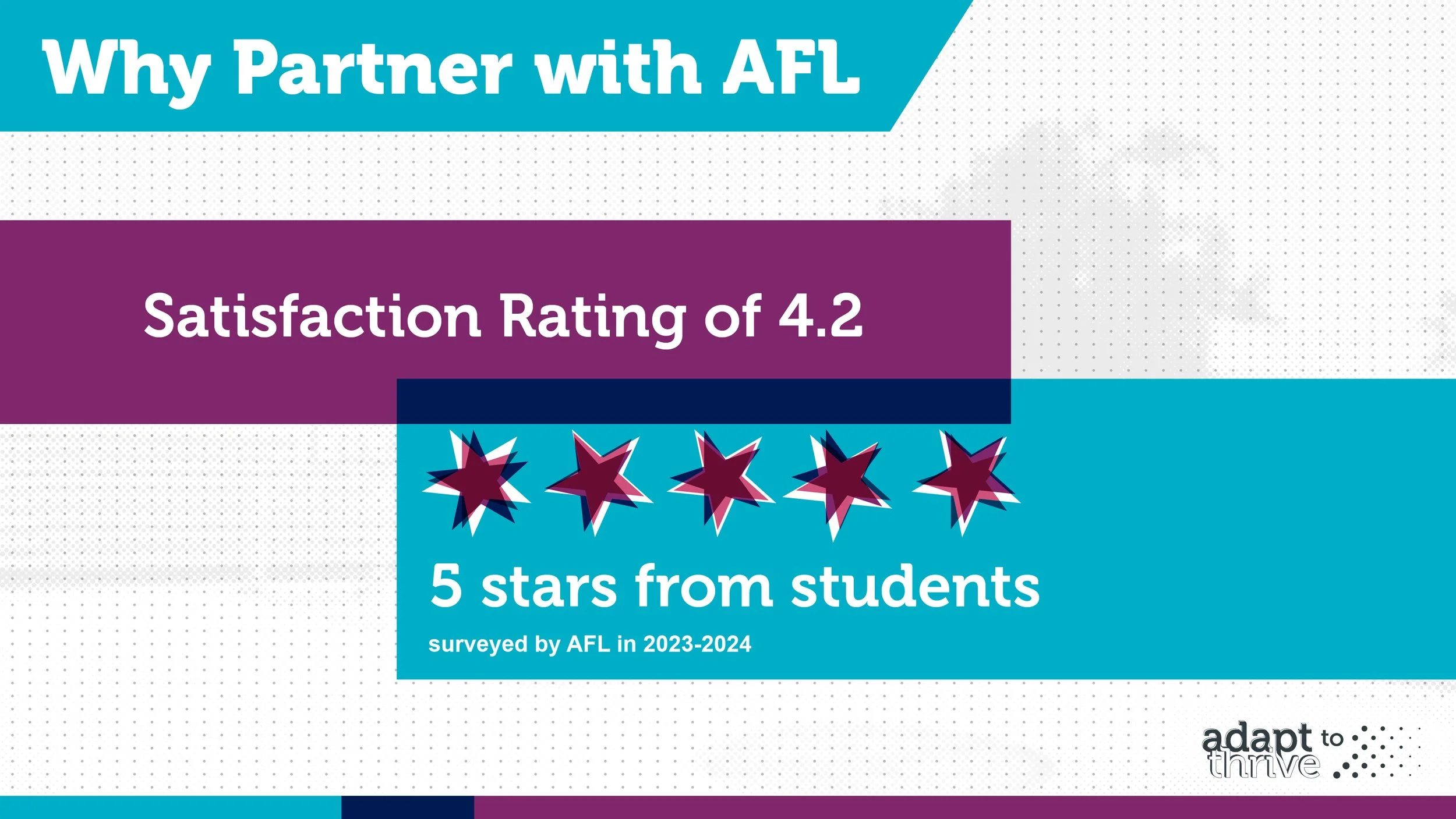
Adapt to Thrive
Introduction
Develop a campaign utilizing teachings from the Adapt for Life framework.
Adapt to Thrive is a collection of activities inspired by the Adapt for Life framework organized into a reusable activity booklet. The activities are spaced across academic terms to create regular connection points with mental health exercises and feature social activities to promote peer-to-peer connections and support.



Problem
The challenge for our team was to determine a low-cost method Adapt for Life could offer to provide long-term engagement to students with mental health exercises and coping skills. This included rough cost estimates, how those costs might be covered, specifications on the expansion method, and the plan for implementing the idea pitched to the client.
Approach
The entire project was broken down into three main stages. The first stage was referred to as “Analysis and Positioning”. It consisted of early research on feedback surrounding the mental health item we were asked to expand, audience research, and research into trends within the mental health field. Our second stage was “Strategy and Creative Planning”, which involved research on funding, audience segmentation, and creative concept development. The final phase was called “Execution and Launch”, and was the period for refining the creative concept and launch plan for the solution developed to address the problem presented to us.
My primary responsibilities through all project phases were presentation slide production, brand image analysis and creation, and quality checks. As we began developing our extension of the Adapt for Life brand, I was responsible for creating basic brand guidelines, the new logo, and basic slide templates in addition to the previously mentioned responsibilities. In the creation of new/additional imagery to be used in slides and deliverables, a collection of curated images was compiled and edited in Adobe Photoshop. Materials provided by the client were used as a basis for how new images should look and be applied. Adobe Illustrator was used in the creation of presentation slides and the creation of the Adapt to Thrive logo. It was also used to create and share slide templates with creative team members.
-
During this project phase, our team worked to become familiar with the Adapt for Life program and the part of people’s lives it has a role in. This is where we outlined the suicide prevention and Mental Wellness Community landscape, the Adapt for Life-specific landscape, their current target audience, and created a SWOT (strengths, weaknesses, opportunities, and threats) analysis. The research collected during this phase allowed our team to build an area of focus to create a marketable solution for our client.
-
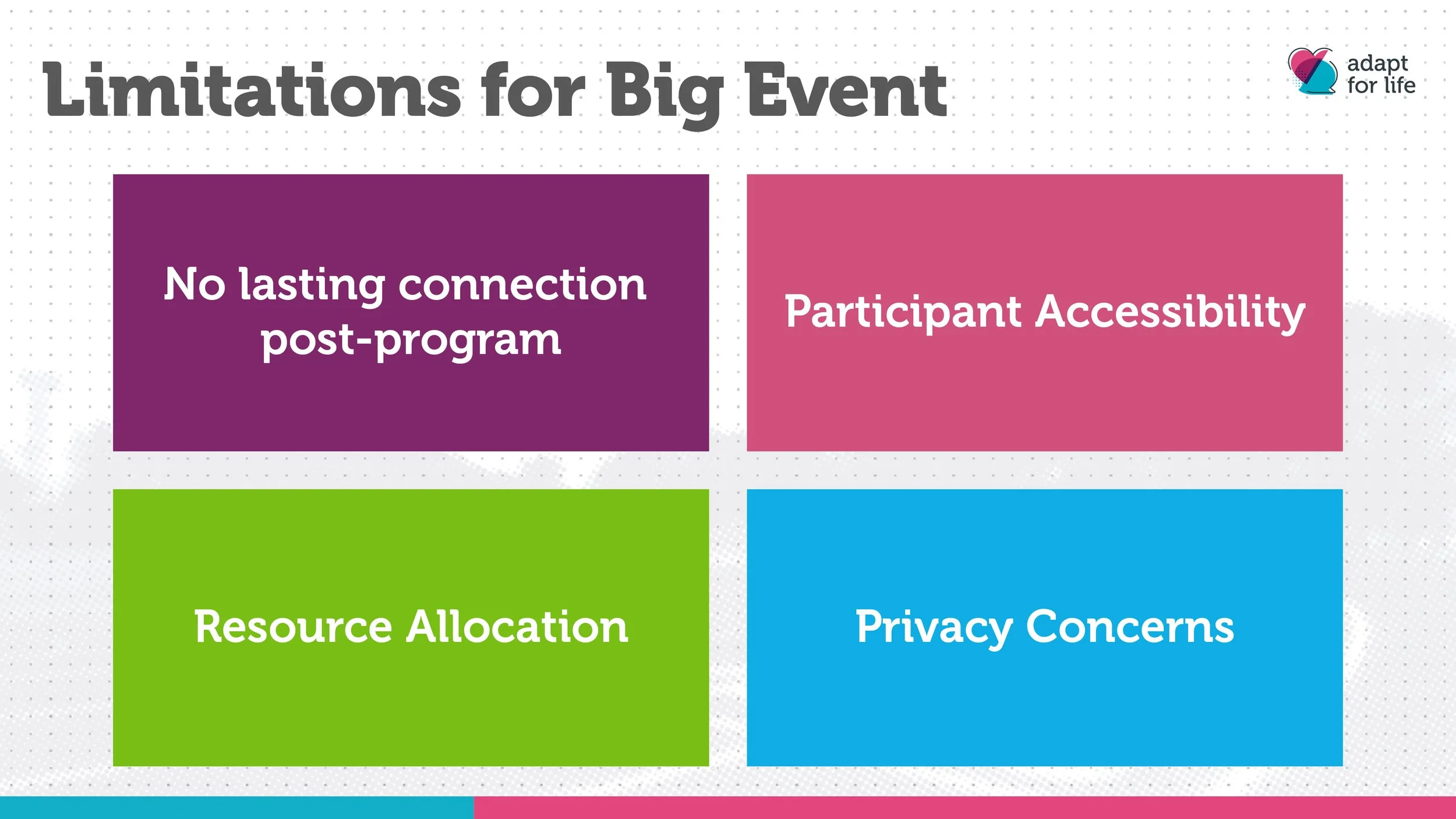
For the second phase, we segmented our target audience into two main parts: the students taking part in our final solution, and the school teachers/administrators we would be marketing our solution to. This was important as we needed our solution to be appealing to both parties for the launch of any outcome to be successful. The other part of this phase involved identifying three potential strategies/concepts to be the motivation behind the final outcome. Each strategy/concept was given a description outline of how it could assist the Adapt for Life framework, and foreseen limitations to be addressed during the next phase.
-
This was the final phase of the project before presenting our launch pitch to the client. It was during this time that we refined our solution, a long-term cooperative mental health exercise activity book, solution branding, funding, and launch strategy. For our solution, this meant a usable product ready to hand to the client, with all details and activities included. As for the funding and launch, this meant specific opportunities for funding with estimated cost to launch, and a working launch timeline that could be implemented immediately.


Deliverables


Conclusion
The desired impact of the long-term activity booklet would be to increase students’ ability to handle difficult and upsetting emotions/situations through the long-term practice of coping skills. I believe this is achievable with the current plan, but the success could be enhanced through focus groups and incorporating feedback after practice runs of the student activities. I also think including yearly updates based on input from included surveys to the activities to help maintain engagement would be helpful when learning key mental health content.
This project also had a personal impact, allowing me to grow as a designer. It was a key challenge that pushed my skills and abilities in Photoshop. Many of the assets I was
asked to work with also allowed me to enhance my analytical and problem-solving skills. By working within a brand, but not being provided a structured brand guide, I often had to determine how materials were produced so that I could create additional assets for use by my team. This allowed me to develop my templates and create an organizational structure I could use across assets to assist in streamlining the production of deliverables. This project also allowed me an opportunity to be more involved in a multifaceted project that involved teamwork and communication with instructors outside our team to clarify areas of confusion regarding tasks. It helped me get a clearer understanding of how I like to handle information and work breakdown in a team setting, allowing me to better understand what I am looking for in my future career.